

PRODUCTS
Features
Linear Formula: | TaNb |
Standard: | ASTM B708 |
Purity: | ≥99.9% or 99.95% |
Size: | Circular tantalum sputtering targets: Diameter 15mm-400mm x Thickness 1mm-28mm Rectangular tantalum sputtering targets: Thickness 1mm-40mm x Width max 1000mm x Length max 3000mm |
Material Grade: | R05240 (Ta-40Nb) Tantalum Niobium Alloy, 60 % tantalum, 40 % niobium, electron-beam furnace or vacuum-arc melt. |
Tantalum Niobium Alloy Disc Description
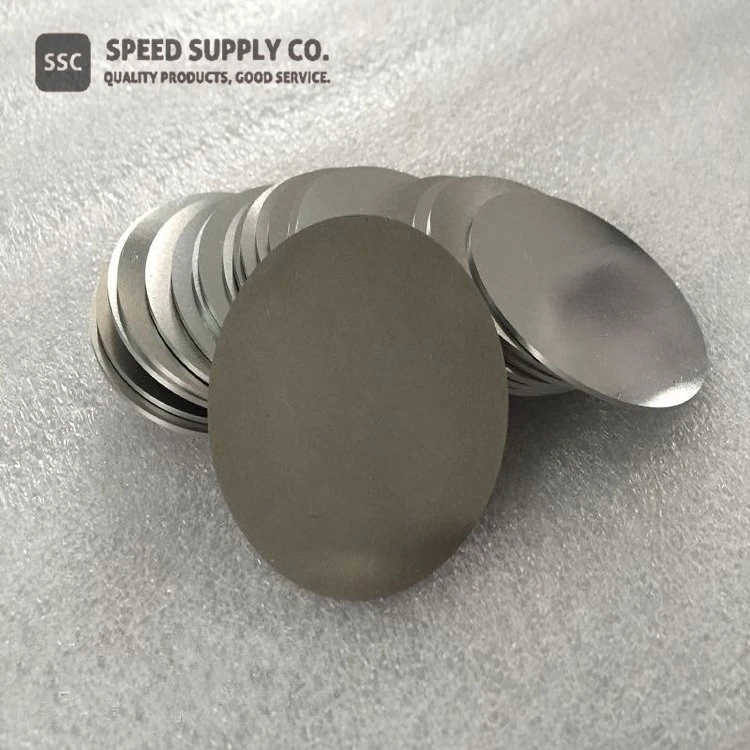
A tantalum-niobium alloy disc is a circular-shaped component made from a blend of tantalum and niobium metals. This alloy combines the desirable properties of both elements, resulting in enhanced performance and specific characteristics. Here's a description of a tantalum-niobium alloy disc:
Material Composition: Tantalum-niobium alloy discs are composed of a mixture of tantalum (Ta) and niobium (Nb) metals. The exact composition can vary depending on the desired properties and specific application. Tantalum and niobium are both refractory metals known for their high melting points, corrosion resistance, and excellent mechanical properties.
High-Temperature Resistance: The tantalum-niobium alloy disc exhibits high-temperature resistance due to the individual properties of tantalum and niobium. Tantalum has a melting point of approximately 3,020°C (5,468°F), while niobium has a melting point of around 2,468°C (4,474°F). This combination allows the alloy disc to withstand extreme temperatures encountered in various high-temperature applications.
Corrosion Resistance: Tantalum and niobium possess excellent corrosion resistance, making the alloy disc highly resistant to attack by acids, alkalis, and other corrosive substances. This corrosion resistance is crucial in applications where the disc is exposed to aggressive chemical environments, such as chemical processing or electroplating.
Mechanical Strength: The tantalum-niobium alloy disc exhibits good mechanical strength, providing structural integrity and resistance to deformation. This makes it suitable for applications where the disc may undergo mechanical stress, such as high-pressure environments or situations requiring load-bearing capabilities.
Electrical Conductivity: Tantalum and niobium are both known for their good electrical conductivity. The alloy disc retains this property, making it suitable for applications that require efficient electrical conduction or for use in electrical contacts or electrodes.
Biocompatibility: Tantalum and niobium are biocompatible metals, meaning they are well-tolerated by the human body and have low toxicity. This property makes tantalum-niobium alloy discs suitable for medical and dental applications, such as implants or surgical instruments.
Applications: Tantalum-niobium alloy discs have a wide range of applications across various industries. They are used in the aerospace industry for components subjected to high temperatures and corrosive environments. In the chemical processing industry, they are employed in equipment such as heat exchangers, reactors, and distillation columns. Additionally, they find use in electronics, energy production, medical devices, and nuclear applications.
It's important to note that specific properties and applications of tantalum-niobium alloy discs may vary depending on the exact composition, manufacturing process, and intended purpose. Consulting with a specialist or manufacturer can provide more detailed information about the specific tantalum-niobium alloy disc required for a particular application.
Chemical Composition
Element | C | O | N | H | Fe | Mo | Nb | Ni | Si | Ti | W |
R05240 | 0.01 | 0.02 | 0.01 | 0.0015 | 0.01 | 0.02 | 35.0–42.0 | 0.01 | 0.005 | 0.01 | 0.05 |
Tantalum Niobium Alloy Disc Applications and Related Industries
Tantalum-niobium alloy discs find applications in various industries that require a combination of high-temperature resistance, corrosion resistance, and mechanical strength. Some of the key industries and applications where tantalum-niobium alloy discs are utilized include:
Aerospace and Defense: Tantalum-niobium alloy discs are commonly used in the aerospace and defense industries. They find application in components subjected to high temperatures, such as jet engine parts, rocket nozzles, and heat shields. The alloy's ability to withstand extreme conditions and resist corrosion makes it suitable for these demanding aerospace and defense applications.
Chemical Processing: Tantalum-niobium alloy discs are utilized in the chemical processing industry, especially in equipment that comes into contact with corrosive substances. They are used in reactors, heat exchangers, distillation columns, and other components that require resistance to aggressive chemicals and high temperatures. The alloy's excellent corrosion resistance and high-temperature stability contribute to the reliability and longevity of such equipment.
Electronics and Electrical Engineering: Tantalum-niobium alloy discs are employed in various electronic and electrical applications. Their combination of electrical conductivity and resistance to high temperatures and corrosion makes them suitable for electrical contacts, connectors, and components in electronic devices, as well as in power generation and transmission systems.
Medical and Dental Implants: Tantalum-niobium alloy discs are utilized in the medical and dental industries for implants and surgical instruments. The biocompatibility of the alloy, along with its resistance to corrosion and high strength, makes it suitable for applications where it interacts with the human body.
Energy and Power Generation: Tantalum-niobium alloy discs are used in energy production and power generation systems. They can be found in components such as heat exchangers, turbines, and generators, where they need to withstand high temperatures, resist corrosion, and maintain mechanical integrity.
Nuclear Industry: Tantalum-niobium alloy discs are employed in the nuclear industry due to their excellent high-temperature and corrosion resistance properties. They can be found in various applications, including nuclear reactors, fuel cladding, and components for handling radioactive materials.
Research and Development: Tantalum-niobium alloy discs are used in research and development laboratories for various experimental purposes. They can be utilized in high-temperature experiments, corrosive environments, and mechanical testing, allowing researchers to study and develop new materials and processes.
It's important to note that the applications mentioned above represent a subset of the potential uses of tantalum-niobium alloy discs. The unique combination of properties offered by the alloy makes it valuable in a range of industries where high-temperature resistance, corrosion resistance, and mechanical strength are essential requirements.
Hot Tags: tantalum niobium alloy disc, China, suppliers, buy, for sale, made in China
You Might Also Like


Send Inquiry
