

PRODUCTS
Features
CAS No.: | 7704-99-6 |
Linear Formula: | ZrH2 |
Material: | Zirconium Hydride |
Purity: | 99 %, 99.5% |
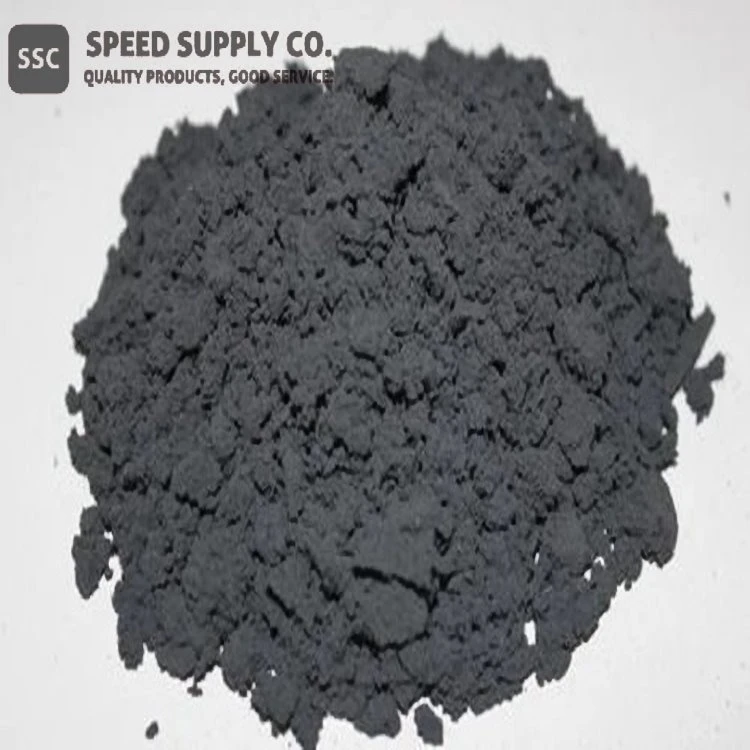
Appearance: | Dark gray to black powder |
D50 Particle Size: | 400mesh |
Zirconium Hydride Description
Zirconium hydride describes an alloy made by combining zirconium and hydrogen with the symbol ZrH2. Its melting point is approximately 800℃. Zirconium hydride with increased hydrogen content can be made harder and stronger than zirconium, but such zirconium hydride is also less ductile than zirconium.
Zirconium hydride powders are soluble in hydrofluoric acid or alcohol; they react violently with water, acids, oxidizers or halogenated compounds.
Zirconium hydride powders are odorless, dark gray to black metallic powders. Zirconium hydride micron powder is used as strong reducing agents, foaming agents, and additive in hard alloys. It is also used as a neutron moderator in thermal-spectrum nuclear reactors. Moreover, ZrH2 is used in powder metallurgy, as a hydrogenation catalyst, and as a reducing agent, vacuum tube getter, and a foaming agent in production of metal foams. Other uses include acting as a fuel in pyrotechnic compositions, namely pyrotechnic initiators.
Zirconium hydride is created by combining refined zirconium with hydrogen. Like titanium, solid zirconium dissolves hydrogen quite readily. The density of zirconium hydride varies based the hydrogen and ranges between 5.56 and 6.52 g cm-3. They behave as usual metals in terms of electrical conductivity and magnetic properties (paramagnetic, unless contaminated with ferromagnetic impurities). Their structure and composition are stable at ambient conditions. Even in the narrow range of concentrations which make up zirconium hydride, mixtures of hydrogen and zirconium can form a number of different structures, with very different properties. Understanding such properties is essential to making quality zirconium hydride.
Zirconium Hydride Composition
(Zr + Hf)+ H | Cl | Fe | C | Mg | D 50 |
99.5 | 0.06 | 0.20 | 0.02 | 0.06 | 400mesh |
99.0 | 0.06 | 0.50 | 0.05 | 0.06 | 400mesh |
Zirconium Hydride Applications and Related Industries
● Strong reducing agents, foaming agents, hard alloy additives
● Important factor in the operation of several types of nuclear reactors
● Hydrogenation catalysts in powder metallurgy
● Getters in the vacuum tube industry
● Seal between a metal and ceramic
● Fuel in pyrotechnic compositions, namely pyrotechnic initiators.
● Chemical Manufacturing
● Hydrogen Storage
● Research & Laboratory
Chemical Identifiers
Linear Formula | ZrH2 |
MDL Number | MFCD00148878 |
EC No. | 231-727-3 |
Beilstein/Reaxys No. | N/A |
Pubchem CID | 4137802 |
IUPAC Name | zirconium dihydride |
SMILES | [ZrH2] |
InchI Identifier | InChI=1S/Zr.2H |
InchI Key | QSGNKXDSTRDWKA-UHFFFAOYSA-N |
Zirconium Hydride Properties (Theoretical)
Compound Formula | H2Zr |
Molecular Weight | 93.24 |
Appearance | Dark gray to black powder |
Melting Point | N/A |
Boiling Point | N/A |
Density | 5.56 g/cm3 |
Solubility in H2O | N/A |
Exact Mass | 91.920354 |
Monoisotopic Mass | 91.920349 Da |
Zirconium Hydride Health & Safety Information
Signal Word | Danger |
Hazard Statements | H228-H315-H319-H335 |
Hazard Codes | F |
Risk Codes | 11-36/37/38 |
Safety Statements | 24/25-43-7/8 |
RTECS Number | ZH8015000 |
Transport Information | UN 1437 4.1/PG 2 |
WGK Germany | 3 |
GHS Pictograms | GHS02 Flame
GHS07 Exclamation Point
|


You Might Also Like


Send Inquiry
