

PRODUCTS
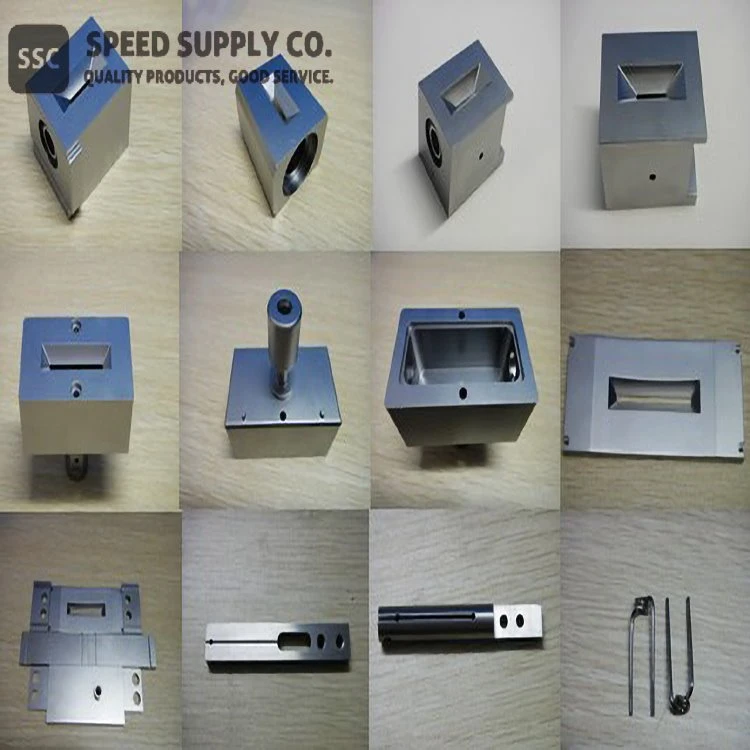
Features
Material: | Tungsten, Tungsten Alloy |
Purity: | 99% |
Shape: | As per drawings |
Size: | As per drawings |
Tungsten Ion Implantation Components Description
Tungsten is a hard metal with a lustrous and silvery white appearance. It is resistant to oxidation and attack by acids and alkalis. It is a bulky metal and has the highest melting point of any metal. The chemical name of tungsten is wolfram, represented by W. Its atomic number is 74 and it belongs to the transition metal category, period 6 of the periodic table.
Ion implantation is an important process that is widely used in semiconductor device fabrication, metal finishing, and materials science research. It is a low-temperature process through which the ions of an element are accelerated into a solid target, thereby changing the physical, chemical or electrical properties of the target.
Ion implanter is the key equipment in making integrated circuit. When ion beams being shot onto the surface of semi-conductor and deposited, the carrier concentration and conduction type is changed. Owning to its excellent surface modification, ion implantation is widely applied in semi conducting material, metal, ceramics, high-molecular polymer, etc.
Ion implantation is essential in making massive integrated circuit (IC). The components of ion implantation are often made of TZM, molybdenum and tungsten because these materials could perform well in harsh environments due to their corrosion resistance, strength, and high thermal conductivity. The most important part of an implanter system is the beam path in which components are engaged. Here, the ions are generated, concentrated, accelerated, and targeted towards the wafer.
Products for Semiconductor Industry
Chambers (tungsten, molybdenum and alloys)
Filaments (tungsten and tungsten alloys)
Arc slits (tungsten, molybdenum and alloys)
Holders (tungsten, molybdenum and alloys)
Cathodes (tungsten, molybdenum and alloys)
Spare parts (tungsten, molybdenum and alloys, ceramics, steel)
Specification and Chemical Composition
Material | Type | Chemical Composition (by wt.) |
Pure Tungsten | W1 | >99.95%min. Mo |
Tungsten Copper Alloy | WCu | 10%~50% Cu / 50%~90% W |
Tungten Heavy Alloy | WNiFe | 1.5 % - 10 % Ni, Fe, Mo |
Tungten Heavy Alloy | WNiCu | 5 % - 9.8 % Ni, Cu |
Tungsten Rhenium | WRe | 5,0 % Re |
Moly Tungsten | MoW50 | 0,0 % W |
Chemical Properties of Tungsten
Chemical Data | |
CAS number | 7440-33-7 |
Thermal neutron cross section | 19.2 barns/atom |
Electrode potential | 4.5 V |
Ionic radius | 0.620 Å |
Electro negativity | 1.7 |
X-ray absorption edge | 0.17837 Å |
Electrochemical equivalent | 3.43 g/A/h |
Physical Properties of Tungsten
Properties | Metric | Imperial |
Density | 19.3 g/cm3 | 0.697 lb/in3 |
Melting point | 3370 °C | 6100 °F |
Boiling point | 5900 °C | 10700 °F |
Mechanical Properties of Tungsten
Properties | Metric | Imperial |
Tensile strength | 980 MPa | 142000 psi |
Modulus of elasticity | 400 GPa | 58000 ksi |
Shear modulus | 156 GPa | 22600 ksi |
Poissons Ratio | 0.28 | 0.28 |
Hardness, Brinell | 294 | 294 |
Hardness, Vickers | 310 | 310 |
Hardness, Knoop | 318 | 318 |
Hardness, Rockwell A | 66 | 66 |
Hardness, Rockwell C | 31 | 31 |
Thermal Properties of Tungsten
Properties | Metric | Imperial |
Thermal expansion co-efficient (@20-100°C/68-212°F) | 4.40 µm/m°C | 2.44 µin/in°F |
Thermal conductivity | 163.3 W/mK | 1133 BTU in/hr.ft².°F |
Tungsten Ion Implantation Components Applications and Related Industries
● Semiconductor manufacturing
● Metal finishing for tool steel toughening and surface finishing
● Ion beam mixing to achieve graded interface and strengthen adhesion between immiscible material
● Research & Laboratory
● Semiconductor
● Metal
You Might Also Like


Send Inquiry
